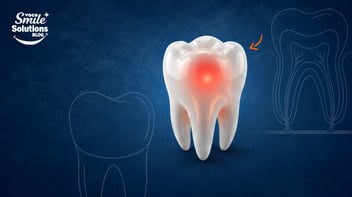



Vital pulp therapy (VPT) sits at a critical intersection in restorative dentistry in which biology, material science, and clinical decision-making must align in a very narrow window. The objective is clear: preserve pulp vitality and avoid escalation to endodontic treatment. The challenge, however, is far less straightforward. Outcomes are highly sensitive not just to technique, but to how materials behave under real clinical conditions. That includes moisture control, placement precision, sealing ability, and long-term stability beneath definitive restorations.
For decades, clinicians have relied on calcium hydroxide and, more recently, mineral trioxide aggregate (MTA)–based materials to support these procedures. Both categories have well-documented biological benefits, but they also introduce practical considerations that influence everyday workflow. Handling characteristics, setting behavior, delivery systems, and interface integrity all play a role, not only in clinical success but in efficiency, predictability, and ultimately, patient experience. If a material performs well biologically but creates friction in procedural workflow, timing, application or consistency, what does that mean for outcomes over time?
This is where the evolution of calcium silicate technologies becomes particularly relevant. Newer generations of MTA and MTA-inspired materials are not simply iterations—they represent a response to longstanding clinical limitations associated with traditional formulations. Understanding how these materials differ at a chemical and functional level, alongside how they integrate into modern restorative workflows, offers a more complete picture. Because in vital pulp therapy, success is rarely about choosing between categories; it’s about selecting materials that consistently deliver under the realities of daily practice.
Calcium Hydroxide: The Historical Standard
For decades, calcium hydroxide has been widely used as a pulp-capping material. Its popularity stems from its biological properties and clinical accessibility.
Calcium hydroxide has a high pH, which provides antibacterial effects and stimulates the formation of reparative dentin. This mechanism has made it a reliable option for promoting pulp healing in both direct and indirect pulp capping procedures.
Because of its long history, clinical familiarity, and biological properties, calcium hydroxide remains a valuable material in dentistry and continues to be used in a variety of clinical applications.
At the same time, as treatment goals and material science have evolved, particularly in procedures like vital pulp therapy, additional material characteristics have become increasingly important.
Limitations of Calcium Hydroxide in VPT
While calcium hydroxide has a long history of clinical use and remains valuable in many pulp-protection procedures, not all calcium hydroxide materials are formulated or used in the same way. Traditional, non-resin-modified calcium hydroxide liners may present challenges in specific clinical situations, particularly when moisture resistance is critical.
One commonly cited limitation of conventional calcium hydroxide is solubility, which may affect its ability to maintain a durable barrier against bacterial infiltration over time. In addition, some calcium hydroxide materials have limited inherent adhesion to dentin, which can increase the importance of proper case selection, placement technique, and the overlying restorative seal.
From a biological perspective, calcium hydroxide can stimulate hard-tissue bridge formation; however, dentin bridges associated with traditional calcium hydroxide have been reported to contain structural defects, sometimes referred to as tunnel defects, that may permit bacterial penetration.1 In some cases, its high alkalinity may also contribute to localized pulp irritation.
These considerations do not diminish the role of calcium hydroxide in dentistry. Rather, they help explain why newer formulations and alternative materials, including resin-modified calcium hydroxide liners and bioceramic materials such as MTA, have been developed to address different clinical demands.
The Introduction of MTA
Mineral trioxide aggregate (MTA) was introduced as a bioactive calcium-silicate cement designed to build upon the biological foundation established by calcium hydroxide, while addressing certain performance characteristics important in vital pulp therapy.
MTA offers excellent biocompatibility, promoting a favorable healing response in pulp tissue. It supports more predictable dentin bridge formation and is associated with reduced inflammation compared with traditional materials2.
One of MTA’s most important advantages is its ability to form a crystalline calcium silicate layer, which triggers the formation of tertiary dentin. Furthermore, it has a superior sealing ability, which helps prevent bacterial leakage, an essential factor in maintaining pulp vitality.
A growing body of clinical evidence supports these advantages in vital pulp therapy applications. Systematic reviews and meta-analyses have consistently demonstrated higher success rates for MTA compared with calcium hydroxide in direct pulp capping procedures, with improved long-term outcomes and reduced failure risk3,4
Limitations of Traditional MTA Materials
While MTA represents a significant advancement compared to calcium hydroxide, traditional formulations are not without challenges.
Clinicians often report long setting times, which can complicate workflow and increase chair time. Handling can also be difficult due to the material’s consistency, making precise placement more challenging in certain clinical situations. And powder/liquid formulations lend themselves to human error that can create an inconsistent mix.
Another consideration is the risk of discoloration, particularly in esthetic zones, depending on the formulation used.5 MTA cements traditionally contain a compound called bismuth oxide that, over time, breaks down and forms metallic bismuth particles (or dark bismuth suboxides), turning grayish or even black and shines through the more translucent enamel and dentin.
Additionally, MTA typically comes at a higher material cost compared with calcium hydroxide, which may influence material selection in some practices.6
These practical limitations have driven ongoing innovation in the category.
The Next Generation of Pulp Capping Materials
Modern calcium-silicate materials represent the next step in the evolution of vital pulp therapy.
These newer formulations are designed to retain the biological advantages associated with calcium-silicate materials, while addressing clinical considerations such as handling, setting time, and esthetics. Key improvements include:
- Immediate placement of restorative material after application of MTA cement, supporting more timely and efficient workflows
- Enhanced handling properties, allowing for more predictable placement
- No risk of discoloration, particularly important in anterior restorations
- Improved consistency and delivery systems, increasing ease of use
As material science continues to advance, clinicians now have access to a broader range of options that balance biological performance with practical efficiency. The appropriate choice depends on the specific procedure, clinical goals, and handling preferences, reinforcing that no single material is universally ideal for every indication.
Rather than viewing calcium hydroxide and MTA as competing materials, it is more useful to see them as part of a continuum, one that reflects the ongoing refinement of bioactive materials in dentistry.
Conclusion
Vital pulp therapy continues to evolve alongside advancements in dental materials.
Calcium hydroxide has played a foundational role in pulp therapy and continues to serve as a useful material in many clinical applications. However, the development of MTA, as well as improvements on the original MTA formulations, and newer calcium-silicate materials has expanded the possibilities for preserving pulp vitality.
Today’s clinicians are no longer limited to traditional options. By understanding the strengths and limitations of each material, they can better evaluate emerging technologies designed to improve both clinical outcomes and workflow efficiency.
Continue the Learning
Interested in learning more about modern calcium-silicate materials used in vital pulp therapy?
Explore one example of a newer MTA-based material designed to address common clinical challenges such as handling and setting time.
References:
- Hilton, T. J. (2009). Keys to clinical success with pulp capping: A review of the literature. Operative Dentistry.
- Mostafa NM, et al. (2018) Mineral trioxide aggregate vs. calcium hydroxide in direct pulp capping: Literature review. Online Journal of Dentistry and Oral Health.
- Zhu C, et al. (2015) Clinical outcome of direct pulp capping with MTA or calcium hydroxide: a systematic review and meta-analysis. International Journal of Clinical and Experimental Medicine.
- Pusa, N, et al. (2025). Clinical success of vital pulp therapy for pulp-exposed permanent teeth: A systematic review and meta-analysis. Journal of Oral Science.
- Lin, H.-N., et al. (2022). Discoloration improvement by mechanically-milled binary oxides as radiopacifier for mineral trioxide aggregates. Materials.
- Arandi, N. (2017). Calcium hydroxide liners: a literature review. Clinical, Cosmetic and Investigational Dentistry.

.jpeg?width=352&name=ChatGPT%20Image%20May%2022%2c%202026%2c%2011_53_24%20AM(1).jpeg)